If you’ve been following the “Unf*ck Our Finances” series on Instagram, you know we are trying to find ways to save money and change the trajectory of our finances. We’re looking for the structural leaks in our budget…the places where we’re mindlessly bleeding cash every single month. I am working on renovating our house after a disaster so I need to find ways to save money, and build savings so I can finally put her back together.
The biggest culprit we’ve found? (other than my impulsive spending LOLLL!)The “convenience tax.” We pay a massive premium for someone else to mix our soap, churn our butter, and cut our meat. I’ve decided that we’re officially opting out. Here are five moves we’ve made that are actually moving the needle on our savings balance. Sure, it takes more time to prep these things, but I promise it’s SO WORTH IT.
1. DIY Butter
Premium butter has become ridiculously expensive, but here’s the secret: it’s just one ingredient. Making it yourself is an ultimate financial move because you get two products for the price of one: high-quality butter and fresh buttermilk for baking. Try it in your pancakes and I promise you’ll never look back!

The Process: Grab a quart of heavy cream. Pour it into a stand mixer and let it rip. It’ll go from liquid to whipped cream, to weird curdled looking crap, and eventually, the yellow butter will clump together and separate from the liquid. On average, it takes about 20 minutes to get fresh butter. I store it in a butter crock on my counter and it lasts a couple weeks. One large carton of whipping cream makes about 2 crocks of butter for us. Make sure you add a little salted cold water to your crock to prevent your butter from souring! My FAVORITE butter crock is linked HERE
The Key Step: Drain the liquid (save that buttermilk for pancakes!), then “wash” the butter in a bowl of ice water. Knead it like dough until the water stays clear. If you leave any buttermilk behind, it’ll go sour in a heartbeat. Add a pinch of sea salt, and you’ve got better butter than the name brands for a fraction of the price.
2. Stop Paying for Water (DIY Detergents)
Most commercial detergents are mostly water and expensive marketing. By switching to dry, concentrated powders, you pay for the active ingredients and save hundreds per year. I switched about 6 months ago and I don’t think I’ll ever look back.
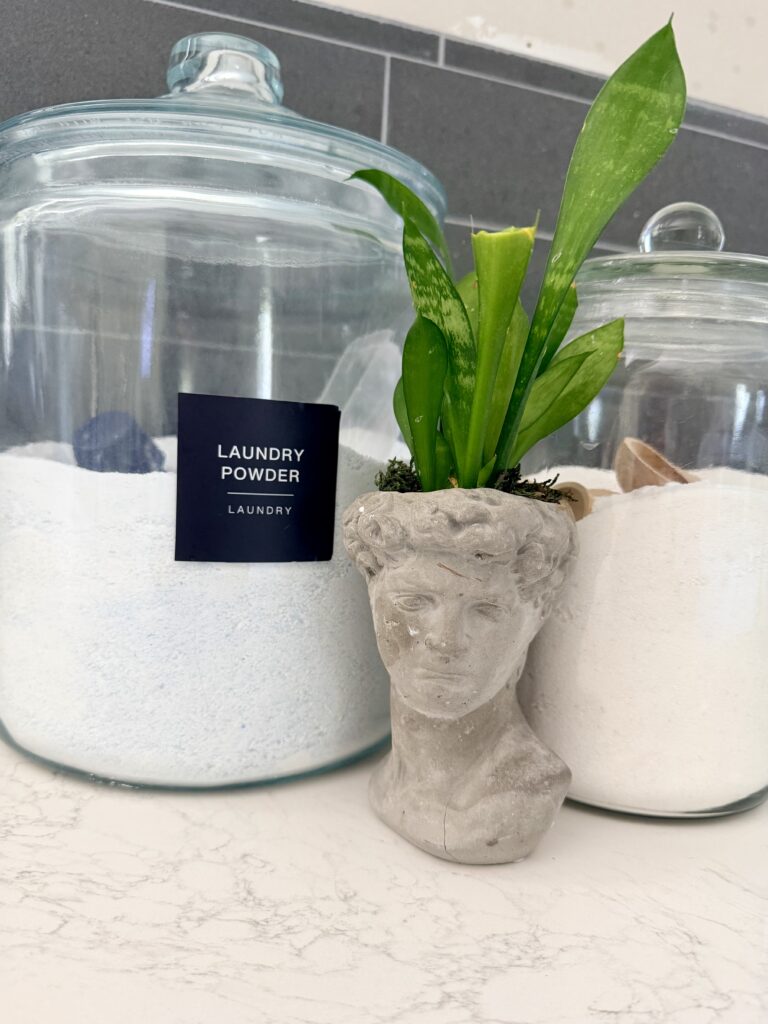
Pro tip: I treat stains with Dr. Bronner’s Sals Suds and add vinegar to a downy ball or the fabric softener bin in my washer to help soften clothes and prevent scummy build up in my washer.
PSA: This recipe works for my HARD water here in PA. You may need to adjust your recipes based on your water quality for best results. Do not use grated soaps in your detergent. This wrecks your washer by causing a build of of soap scum.
Laundry Powder
- 1 box (approx. 4lbs) baking soda
- 1 box (approx 3.5lbs) Washing Soda-add more for hard water. I use about 5 lbs for my big batch.
- 4 cups of epsom salt
- 2 cups oxy whitener (I like Molly’s Suds)
Usage: 2-4 tablespoons per medium load directly in the drum. When I wash large loads I use about 1/4 cup. This may take some playing with to get the right amount for your clothes!z
Dishwasher Powder
- 1 cup Washing Soda
- 1 cup Baking Soda
- 1/2 cup Citric Acid (This is the heavy lifter for grease, add more if you have hard water)
- 1/4 cup fine Sea Salt
- Pro-Tip: Use plain white vinegar in your rinse-aid compartment. It keeps your glasses clear for pennies.
3. Bulk Meats: Be Your Own Butcher
The markup on pre-cut meat is one of the biggest scams in the grocery store. You’ll pay $9/lb for pork chops when the whole loin sitting two feet away is $2.50/lb. The caveat tho? It’s pricy upfront so I do have to do a bit of budgeting and saving to be able to spend the $200 on a giant slab of beef.
We’ve started buying primal cuts of meats. You know…the massive, uncut slabs of meat at Costco? Yeah, we buy those and started doing the work ourselves. Spend 20 minutes with a sharp knife and some freezer bags. Portion it into steaks, roasts, and cubes. You’ve just cut your meat budget by 50% just by doing a little bit of manual labor.
I’ve recently added in buying bulk ground beef, fish, and chicken and divvying it into meal portions in freezer bags. This has lasted out family about 4 months so far. So now, when I go grocery shopping for the week, I’ve eliminated the price tag of the meats I have to buy for our meals since it’s already at home in our freezer. It’s taken a bit of a behavioral adjustment (i.e.. I have to remember to thaw the meat before dinner LOL), but so far it has saved us what I estimate to be about $1-200 a week in groceries.
4. The Grocery Tag-Team: Aldi & Trader Joe’s
We stopped doing “the big run” at traditional supermarkets. Instead, we split our list between two of the more budget friendly “chains”:
- Aldi for the Foundation: This is for 80% of our list—produce, eggs, etc. It’s no-frills, and the savings are undeniable. Their glass jar juices are my weakness!
- Trader Joe’s for the “Gap” and snacks: We go here for the things that make us feel human. Affordable olive oils, nuts, and those frozen meal starters that save us from ordering a $60 DoorDash on a Wednesday night When I forgot to thaw the chicken. Occasionally, when I don’t feel like going to both Aldi and TJ’s I’ll just buy almost everything here. I’ve found their prices to be pretty comparable for most items. I’m also a snack fiend and I LIVE for their pickle chips and lava cakes. I’ve learned that if I fully restrict our lives, we always fail. SO I’m sure to budget a few extra dollars for the “expensive” treats we like.
5. The reasons why…
“Unf*cking” your finances isn’t about deprivation; it’s about intentionality. Spending a little extra time every month or week to save a few dollars can go a long way on your journey to Unfuck your finances. And the best part, you can pick and choose what conveniences to keep. Its not a one size fits all solution and its ok to set boundaries and still but the box of butter if you’re feeling lazy this week!
The Hard Math: What It Actually Costs to Stock Up
When you are deep in the “Unf*ck Our Finances” mindset, buying in bulk can feel like a massive hit to your bank account upfront. Dropping a chunk of cash at Costco hurts in the moment, but when you look at the cost-per-meal, you realize just how much money you’re keeping in your pocket over the next 4 to 6 months.
Here is the exact breakdown of our recent stock-up trip, down to the penny.
The Protein Haul (4–6 Month Freezer Stock)
We focused on high-quality proteins, bought them in bulk, and spent about 20 minutes portioning them out ourselves to avoid the “convenience tax.”
- Costco Beef Tenderloin: $189.00
- Yield: 10 thick-cut (1.5-inch) premium steaks.
- The Math: $18.90 per premium steak. (Try getting a 1.5-inch tenderloin at a steakhouse or a standard grocery boutique for under $40).
- This was our splurge protein. We won’t eat this every week, but it’s nice to know we have it for those night we just want a GOOD meat nd potatoes kinda meal.
- Bulk Tilapia (2 packs at $28 each): $56.00
- Yield: 12 full meals.
- The Math: $4.66 per fish meal for the family.
- Boneless Chicken Thighs (2 packs at $38 each): $76.00
- Yield: 12 meals.
- The Math: $6.33 per chicken meal for the family.
- Italian Sausage (3 packs at $11 each): $33.00
- Yield: 24 links total (8 links per package).
- The Math: $1.38 per link (Perfect for stretching into pastas, bakes, or quick grill nights).
Total Protein Investment: $354.00 for months of high-quality dinners.
The DIY Cleaning Stock (Doubled Batch)
Instead of buying those overpriced plastic jugs of water and blue dye every single month, we doubled our DIY non-toxic recipes to build a massive supply that will easily carry us through the next half-year.
- Doubled Laundry Powder:
- Estimated Cost: ~$9.00 total.
- Yield: Over 60–80 loads of laundry.
- Doubled Dishwasher Powder:
- Estimated Cost: ~$6.00 total.
- Yield: So far we’re 3 months deep of Months of daily dish cycles and I’m not even halfway through my stock.
Total Cleaning Investment: ~$15.00
The Bottom Line
For roughly $369.00 total, we successfully took control of our main dinner proteins and our entire household cleaning supply for the next 4 to 6 months.
Our grocery bill this week was $79 at Aldi and $122 at Trader Joes for our family of 5 (Including TWO teenage boys IYKYK. I normally would easily have spent more than double that If I was buying proteins as well.
When you break it down like this, it stops being “expensive” and starts being a strategy. We aren’t wandering through the grocery store every week letting our budget bleed out or restrict us from gettin a treat or two. We pay upfront, we do a little bit of manual labor at the kitchen counter, and we reap the savings for the rest of the year.
Next year I want to buy a 1/2 or 1/4 cow at our local farm to stock up for even longer with better quality meats. But I’m gonna have to untuck my finances a little more before we can afford that LOL!
It’s a slow process, but we’re finally seeing the light at the end of the tunnel.
Happy Saving!!

- DIY Butter Revolution: Making your own butter from heavy cream is cheaper and yields fresh butter plus buttermilk, saving money on store-bought options.
- Stop Paying for Water (DIY Detergents): Switching to homemade, concentrated detergent powders reduces costs by avoiding overpriced water and marketing in commercial products.
- Bulk Meats: Be Your Own Butcher: Buying primal cuts and portioning them yourself drastically cuts your meat expenses by avoiding pre-cut meat markup.
- The Grocery Tag-Team: Aldi & Trader Joe’s: Splitting grocery shopping between Aldi for essentials and Trader Joe’s for special items helps save money while maintaining quality.
- The Bottom Line: Focusing on intentional spending and reducing wasteful expenses like convenience products can boost your savings and financial health.


Leave a Reply